You Won’t Believe What’s Hiding in Honiara’s Local Markets
Honiara, the capital of the Solomon Islands, is often overlooked by mainstream travelers. But if you know where to look, its commercial areas offer a vibrant, authentic glimpse into Pacific Island life. From bustling markets to roadside vendors and small family-run shops, the city pulses with quiet energy. This isn’t flashy tourism—it’s real, raw, and refreshingly unfiltered. I was surprised by how much culture, flavor, and warmth you can find just by wandering its streets. The marketplaces here are not merely places to buy food or souvenirs; they are living spaces where tradition meets daily necessity, where elders trade stories while selling baskets, and children learn the rhythms of community long before formal schooling begins. For the curious traveler, Honiara’s commercial heart offers a rare window into a world that remains deeply rooted in custom, yet quietly adapting to modern realities.
The Heartbeat of Honiara: Central Market as a Cultural Hub
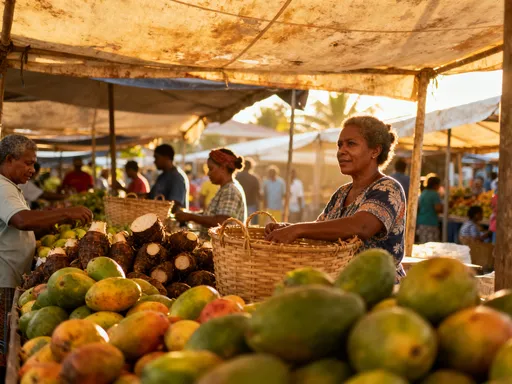
The Honiara Central Market, located just off Mendana Avenue near the wharf, is the city’s most vibrant commercial space and arguably its cultural soul. Open from early morning until mid-afternoon, this sprawling open-air market buzzes with activity as vendors from nearby villages and outer islands arrive with boats and trucks laden with fresh produce, handcrafted goods, and live animals. The air is thick with the scent of ripe mangoes, earthy taro, and grilled fish, mingling with the salty tang of the nearby sea. Brightly colored fruits—red rambutan, yellow papayas, purple eggplants—sit in woven baskets on makeshift tables, while bundles of firewood and banana leaves are stacked at the edges, ready for home use.
More than just a place to buy food, the Central Market functions as a vital social network. Women from the same village often set up adjacent stalls, sharing news between customers. Elders haggle gently over prices, not out of necessity but as a familiar ritual, while young vendors practice English with curious visitors. The market operates on trust and familiarity; cash is common, but informal credit among regulars is not unusual. It’s a space where community bonds are reinforced through daily exchange. For visitors, the experience is immersive: there’s no curated path, no entry fee, no souvenir stand selling mass-produced trinkets. What you see is real—people buying what they need, selling what they grow, and living in rhythm with the island’s natural cycles.
Among the most striking offerings are the traditional root crops—taro, yam, and cassava—which remain dietary staples across the Solomon Islands. These are often sold in large bundles, wrapped in banana leaves to retain moisture. Fresh seafood is another highlight: reef fish, crabs, and octopus arrive daily from nearby waters, laid out on ice or in plastic tubs. Handicrafts, including finely woven pandanus mats, carved wooden bowls, and shell jewelry, reflect generations of skill passed down through families. These items are not made for tourists but for everyday use or ceremonial occasions, though visitors are welcome to purchase them as meaningful mementos. The market’s authenticity lies in its lack of performance; no one is putting on a show. This is commerce as it has always been—simple, direct, and deeply human.
Beyond the Market: The Rise of Small Retail and Street Commerce
While the Central Market draws the most attention, Honiara’s commercial life extends far beyond its boundaries. Scattered throughout neighborhoods like White River, Kukum, and Panatina, small retail outlets and roadside stalls form a decentralized network of trade that sustains daily life. These micro-businesses—often family-run and operating out of converted shipping containers or simple wooden kiosks—sell essentials like rice, soap, batteries, and soft drinks. Some double as informal gathering spots, where neighbors meet over a cold drink or a shared cigarette.
These small vendors play a crucial role in a cash-poor economy where formal banking and large supermarkets are inaccessible to many. A single stall might stock only a dozen items, but its owner knows every customer by name and often extends credit during tough weeks. This informal economy thrives on reciprocity and mutual support. In many cases, barter still supplements cash transactions—fresh fish might be traded for a bag of rice, or a woven mat exchanged for school supplies. This blending of old and new economic practices reflects the resilience and adaptability of island communities.
Street commerce in Honiara is also shaped by necessity. With limited public transportation and few delivery services, proximity matters. A vendor selling boiled corn or grilled bananas on a busy corner provides not just food but convenience. Women walking home from work might stop to buy a bundle of vegetables from a roadside basket rather than travel to the main market. These small-scale traders are often women, using minimal capital to generate income while managing household responsibilities. Their presence adds texture to the city’s streetscape, turning ordinary corners into nodes of economic and social activity. For travelers, engaging with these vendors offers a more intimate understanding of daily life than any guided tour could provide.
Trading Traditions: How Custom Influences Modern Commerce
In the Solomon Islands, commerce is not just about buying and selling—it is deeply intertwined with cultural values. Traditional customs such as reciprocity, communal responsibility, and respect for elders continue to shape how business is conducted, even in urban settings like Honiara. For instance, a vendor may prioritize selling to a relative or village member before serving others, not out of favoritism but as part of an obligation to support kin. Similarly, profits from a successful day might be shared with extended family rather than saved individually, reflecting the collective nature of island life.
Land ownership also plays a subtle but significant role in commerce. Most land in the Solomon Islands is held under customary tenure, meaning it belongs to clans rather than individuals. This affects how businesses are established and sustained. A market stall or roadside kiosk may occupy land granted by a local chief, and the vendor is expected to contribute to community events or ceremonies in return. This system fosters stability and accountability, ensuring that economic activity remains rooted in social responsibility rather than pure profit.
For visitors, understanding these cultural underpinnings enhances the travel experience. When a vendor offers a smaller portion at no extra charge or refuses to haggle over a price, it may not be about business logic but about maintaining dignity and respect. Recognizing these nuances encourages more meaningful interactions. Travelers who approach commerce in Honiara with cultural sensitivity—by greeting vendors, speaking politely, and acknowledging local norms—often find themselves welcomed not as customers but as temporary members of the community. This is not tourism as transaction; it is tourism as connection.
Hidden Hubs: Commercial Activity Beyond the City Center
While the Central Market is the most visible commercial space, some of Honiara’s most dynamic trade happens on the margins. The wharf area, where inter-island boats arrive daily, is a hub of quiet commerce. As passengers disembark, they are met not by official vendors but by local women and children offering coconuts, fresh fruit, and cold water. These small exchanges—often conducted in rapid Pijin (Solomon Islands Pidgin)—are essential for families who rely on this income to supplement subsistence living.
Similarly, the ferry terminal at Point Cruz serves as a transit point for goods as well as people. Bales of kava root, bundles of firewood, and crates of vegetables arrive from Malaita, Guadalcanal, and other islands, then disperse into the city’s markets and homes. The logistics are informal but effective: goods are unloaded by hand, sorted quickly, and transported by bicycle, wheelbarrow, or shared truck. There are no cranes or forklifts, yet the system works, driven by cooperation and shared knowledge. This grassroots supply chain keeps Honiara fed and functioning, even when official infrastructure falters.
Along the main coastal road, known locally as the Ring Road, roadside markets appear at key junctions. These are often temporary—set up in the morning and dismantled by afternoon—but they serve as critical links between rural producers and urban consumers. A farmer from a nearby village might bring a basket of greens or a few live chickens to sell before returning home. These pop-up markets are especially important during holidays or community events, when demand for fresh food spikes. For travelers, stopping at one of these roadside stalls offers a chance to taste truly local produce, often harvested just hours before. It’s commerce at its most immediate and honest—no packaging, no branding, just food and people.
The Role of Foreign Goods and Imported Products
While local produce dominates the markets, imported goods are a visible and growing presence in Honiara’s commercial landscape. Corner stores and small supermarkets stock shelves with canned corned beef, instant noodles, rice, and packaged snacks—many of them shipped from Malaysia, Singapore, or Australia. These products are often more expensive than locally grown food, yet they remain popular due to convenience, shelf life, and changing dietary preferences, especially among younger generations.
The reliance on imports raises important questions about sustainability and food security. The Solomon Islands imports a significant portion of its rice and processed foods, making it vulnerable to global price fluctuations and shipping disruptions. Cyclones or maritime delays can lead to shortages, driving up prices in local shops. At the same time, the availability of imported goods has altered eating habits. While traditional meals centered on root crops, fish, and coconut remain common in rural areas, urban diets are increasingly influenced by foreign tastes. This shift has public health implications, as diets higher in processed foods contribute to rising rates of diabetes and hypertension.
Yet the story is not one of simple replacement. Many households blend local and imported foods, serving taro alongside canned meat or mixing fresh greens with instant soup. Vendors in the Central Market often sell both: a basket of yams next to a crate of imported apples. This coexistence reflects a pragmatic approach to modern life—honoring tradition while adapting to new realities. For travelers, observing this balance offers insight into the complexities of cultural change. Supporting local farmers by purchasing fresh produce not only ensures a more authentic taste of the islands but also contributes to economic resilience.
Tourism’s Footprint: How Visitors Shape Commercial Spaces
Tourism in Honiara remains modest compared to other Pacific destinations, but its influence on local commerce is slowly growing. Guesthouses, small hotels, and eco-lodges have emerged in recent years, often run by families who also operate craft stalls or restaurants. Near the main hotels, vendors set up tables with shell necklaces, carved wooden figures, and woven hats—items more clearly tailored to tourist tastes. While some of these goods are mass-produced, others are authentic, handmade pieces that reflect genuine cultural artistry.
The challenge lies in ensuring that tourism benefits the community without distorting local economies. When foreign demand drives up prices for basic goods or encourages the production of inauthentic souvenirs, the integrity of traditional commerce can be undermined. However, when tourism is managed thoughtfully, it can strengthen local businesses. Some community-based tourism initiatives now offer guided market tours, cooking classes, and craft workshops, allowing visitors to engage directly with artisans and farmers. These experiences not only provide income but also foster mutual understanding.
For travelers, the key is intentionality. Choosing to eat at a family-run eatery rather than an imported fast-food outlet, buying a handwoven mat from a village artisan, or learning a few phrases in Pijin—these small acts support sustainable tourism. They signal respect and create connections that go beyond the transactional. Honiara does not need to become another polished destination; it needs tourism that honors its pace, its people, and its values.
Navigating Honiara’s Commercial Scene: A Traveler’s Guide
For those planning to explore Honiara’s markets and small businesses, a few practical tips can enhance both safety and authenticity. First, visit the Central Market in the morning, when produce is freshest and the atmosphere is most lively. Wear comfortable clothing and sturdy shoes, as the ground can be uneven and muddy after rain. Bring small denominations of Solomon Islands dollars, as many vendors cannot make change for large bills. Credit cards are rarely accepted, and ATMs may be unreliable, so cash is essential.
When photographing vendors or market scenes, always ask permission first. A simple smile and gesture can go a long way. Many locals are happy to be photographed if approached respectfully, but some may decline, especially if they are in the middle of a transaction. Avoid intrusive or candid shots that capture people without consent. Instead, focus on the colors, textures, and details of the market—baskets of fruit, woven patterns, or the play of light through palm-thatched roofs.
Haggling is not common in Honiara’s markets, especially for fresh food. Prices are generally fair and reflect the cost of transport and labor. If you’re buying crafts, a polite inquiry about price is acceptable, but aggressive bargaining may be seen as disrespectful. A better approach is to engage in conversation—ask about the materials, the making process, or the significance of a design. This not only enriches your understanding but also supports the cultural value of the item.
To support authentic commerce, seek out vendors who sell what they grow or make themselves. Look for signs of freshness—crisp vegetables, firm fruits, lively fish. Avoid stalls that sell imported plastic trinkets or items clearly mass-produced elsewhere. When dining, try local dishes like ika (grilled fish), palusami (taro leaves cooked in coconut milk), or kumara (sweet potato). Many small eateries operate from home kitchens and offer meals at very low prices—this is where you’ll find the most genuine flavors.
Finally, embrace slowness. Honiara’s commercial spaces are not designed for efficiency or speed. Transactions take time. Conversations unfold gradually. People observe, listen, and respond with care. To rush is to miss the point. The true value of these places lies not in what you buy but in what you experience—the warmth of a greeting, the rhythm of daily life, the quiet dignity of people building livelihoods with limited resources. This is not tourism as escape; it is tourism as presence.
Honiara’s commercial areas may lack the polish of tourist hotspots, but they offer something rarer—a genuine connection to everyday life in the South Pacific. By exploring these spaces with curiosity and respect, travelers don’t just see the city—they become part of its rhythm. In a world of curated experiences, Honiara reminds us that the most meaningful journeys happen off the beaten path, where commerce, culture, and community meet. These markets are not attractions; they are lives in motion. And for those willing to look closely, they reveal not just what is for sale, but what it means to live, share, and belong in one of the Pacific’s most authentic capitals.