Seoul’s Secret Playground: Incheon’s Most Photogenic Urban Escapes
Incheon isn’t just a transit hub—it’s a visual goldmine hiding in plain sight. Few travelers expect this coastal city to deliver such striking urban moments, from graffiti-lined alleyways to harborfront sunsets that look almost airbrushed. If you're chasing authenticity with serious style, Incheon’s city spaces deliver. This is where modern Korea writes its story—one frame at a time. More than a gateway to Seoul, Incheon has evolved into a canvas of contrasts: tradition brushes against innovation, decay meets design, and quiet courtyards sit just blocks from buzzing plazas. For photographers and curious wanderers alike, the city offers a refreshing alternative to well-trodden tourist trails, revealing beauty in unexpected corners and everyday scenes.
Beyond the Airport: Discovering Incheon’s Unexpected Visual Charm
Incheon is often reduced to a footnote in travel itineraries—a place to land, collect luggage, and leave. Yet beneath this practical reputation lies a city pulsing with visual energy and urban poetry. Once known primarily as Korea’s bustling port and gateway to international trade, Incheon has quietly transformed into a cultural and architectural mosaic. The city’s layered history—shaped by foreign settlements, wartime shifts, and rapid modernization—has left behind a rich tapestry of textures, colors, and forms that reward the observant eye. Where others see concrete and cranes, photographers find symmetry, shadow, and story.
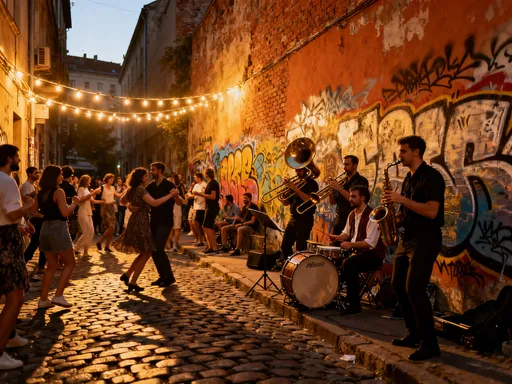
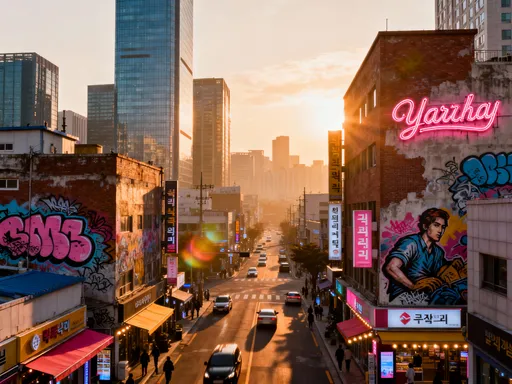
The city’s visual appeal stems from its unique ability to balance the old and the new. Historic neighborhoods with narrow lanes and weathered shopfronts coexist alongside sleek high-rises and smart-city infrastructure. This duality isn’t accidental; it’s a reflection of Incheon’s identity as a place of arrival and reinvention. The harbor, once lined with cargo ships and warehouses, now features waterfront promenades where couples stroll under string lights and artists capture the skyline in watercolor. Even the airport, often a site of stress and haste, has become part of the city’s aesthetic narrative, with nearby walls painted in vibrant murals that celebrate movement and connection.
Urban photography thrives here because Incheon doesn’t try too hard. Unlike cities that curate their image for tourism, Incheon remains refreshingly unpolished. There’s honesty in its peeling paint, hand-painted signs, and spontaneous street life. The city invites you to look closer—to notice the way morning light hits a tiled wall, or how a single tree grows through cracked pavement near a subway entrance. For those willing to step beyond the terminal, Incheon offers a masterclass in finding beauty in the in-between, where the mundane becomes meaningful through the lens.
Chinatown Reimagined: Where Culture Meets Color
Incheon Chinatown is one of the city’s most photographed districts, but its value extends far beyond Instagram aesthetics. Established in the late 19th century as a designated foreign settlement, it is the only officially recognized Chinatown in Korea and a living testament to cultural fusion. Today, it’s a vibrant urban stage where red lanterns sway above cobblestone alleys, murals depict dragons and lotus blossoms, and the scent of jajangmyeon—black bean noodles introduced by Chinese immigrants—drifts from open kitchen windows. This sensory richness translates seamlessly into compelling visual narratives, making it a must-visit for photographers seeking depth and dynamism.
The area’s visual strength lies in its density of color and detail. Buildings are painted in bold hues—crimson, gold, jade green—creating a natural backdrop that requires little enhancement. Mosaic-tiled staircases and calligraphy-covered walls serve as ready-made compositions, while food vendors in red aprons add human elements that ground the scene in daily life. The best light arrives during golden hour, when the low sun bathes the lanterns in a warm glow and casts long shadows across the narrow streets. Shooting from elevated angles, such as the observation deck near Incheon Tower, allows for panoramic views that capture the neighborhood’s layout and energy.
Yet beyond the postcard moments, Chinatown rewards those who engage respectfully with its community. Street photography here should be mindful—ask permission when focusing on individuals, especially elders or shop owners immersed in their routines. Candid shots of hands kneading dough, steam rising from noodle pots, or children chasing bubbles outside a bakery tell quieter but equally powerful stories. The cultural layers—Korean signage alongside Chinese characters, fusion restaurants serving kimchi dumplings—remind viewers that identity is not static but constantly evolving. In this way, photographing Chinatown becomes more than image-making; it becomes a form of cultural listening.
Songdo Central Park: Futuristic Landscapes in Motion
Just a short subway ride from the historic core, Songdo Central Park presents a striking contrast: a meticulously planned urban oasis that feels like a glimpse into the future. Designed as the centerpiece of Songdo International Business District, this 102-acre green space is flanked by glass towers, pedestrian bridges, and a 4.9-kilometer canal that mirrors the sky. The park is a showcase of sustainable urban design, where smart trees with built-in sensors monitor air quality and solar-powered benches charge mobile devices. For photographers, it offers a rare opportunity to capture clean lines, reflective surfaces, and the harmony between nature and technology.
The canal is the park’s most photogenic feature, acting as a liquid mirror that doubles the skyline and softens the city’s hard edges. Early morning visits provide the best conditions for reflection shots, when the water is still and fog often lingers like breath above the surface. Wide-angle lenses excel here, capturing both the expanse of water and the architectural silhouettes rising from its banks. As the day progresses, movement becomes a key element—commuters on bicycles, office workers pausing on benches, and swan-shaped pedal boats gliding across the canal. Using slower shutter speeds can blur motion into gentle streaks, emphasizing the rhythm of urban life.
Symmetry and geometry dominate the visual language of Songdo. The Triskelion Bridge, with its three sweeping arms, creates dynamic leading lines, while the glass façades of nearby buildings reflect clouds, birds, and passersby in unpredictable ways. These reflections can be used creatively—framing a distorted cityscape within a puddle or capturing a cyclist mirrored in a tower window. The area also features art installations, such as the glowing spheres of the Songdo Central Park Fountain, which come alive at dusk with choreographed light and water displays. Night photography here benefits from long exposures to capture both ambient city glow and the movement of light elements.
Songdo challenges photographers to see beauty in precision. While it lacks the rawness of older neighborhoods, it offers a different kind of authenticity—the deliberate, forward-looking vision of a city designed for comfort, connectivity, and sustainability. It’s a reminder that modern Korea isn’t just preserving its past; it’s actively shaping its future, one thoughtfully landscaped park at a time.
Wolmido Island: Retro Vibes and Coastal Frames
Just across the Wolmi Sea Link from central Incheon, Wolmido Island feels like stepping into a different era. Once a thriving seaside resort in the 1970s and 80s, the island now carries the gentle patina of nostalgia—its amusement park rides stand frozen in time, retro neon signs flicker above snack stalls, and the ocean breeze carries the faint scent of salt and fried squid. This blend of faded glamour and coastal charm makes Wolmido a compelling subject for photographers drawn to texture, mood, and storytelling. It’s a place where joy and melancholy coexist, where the past lingers in peeling paint and worn benches, and where everyday moments unfold against a backdrop of sea and sky.
The island’s amusement park, though no longer in full operation, remains a visual anchor. Rusted Ferris wheels and silent carousels offer haunting yet poetic compositions, especially at sunrise or twilight. The contrast between mechanical stillness and natural movement—the way vines climb a broken ticket booth or seagulls perch on a motionless rollercoaster—creates powerful visual metaphors. Wide-angle lenses help capture the scale of these structures against the open sky, while macro shots can highlight details like chipped paint, weathered wood, or a single flower growing through concrete.
Along the waterfront promenade, life continues at a slower pace. Locals gather to fish, play baduk (Korean chess), or sip tea at open-air cafes. These candid moments offer rich opportunities for street photography, particularly when shot with a telephoto lens to maintain distance and authenticity. The golden hour here is especially magical—the sun sets over the Yellow Sea, casting a warm, diffused light across the boardwalk and turning the water into liquid gold. Foggy mornings, too, lend a dreamlike quality, softening edges and wrapping the island in mystery.
Photographers should consider bringing a tripod for low-light conditions, especially when shooting at dawn or dusk. A polarizing filter can help manage glare off the water and enhance cloud definition. While Wolmido may not offer the polish of newer districts, its emotional resonance is unmatched. It invites viewers to reflect on change, memory, and the quiet beauty of places that time has passed by but not forgotten.
Gonghang-dong Airport Wall: Street Art Meets Runway Energy
Nestled just beyond the perimeter of Incheon International Airport, the Gonghang-dong Airport Wall is a hidden gem where urban art and aviation drama collide. Along a stretch of fence facing the active runway, local and international artists have transformed plain metal barriers into a rotating gallery of murals. These vibrant works—ranging from abstract patterns to whimsical creatures—create a striking contrast with the sleek, silver planes that roar overhead during takeoff and landing. For photographers, this location offers a rare blend of controlled chaos and artistic calm, where the precision of flight meets the freedom of street expression.
The real magic happens when a landing jet aligns perfectly with a mural, creating a dynamic composition where man-made creations—art and aircraft—share the same frame. The low angle of approach means planes appear to skim just above the wall, offering dramatic close-ups without the need for long telephoto lenses. Early evening is an ideal time to visit, as the setting sun illuminates the murals while the airport’s runway lights begin to glow. During twilight, a well-timed shot can capture a plane bathed in golden light, its reflection glinting off the painted surface below.
Photographers should approach this site with safety and respect in mind. While the viewing area is public and accessible, it’s important to stay behind designated barriers and avoid using drones, which are prohibited near airport zones. Noise levels can be high during peak flight times, so ear protection is advisable, especially for those with children. A zoom lens (70–200mm) allows for tighter shots of aircraft details, while a wide lens captures the full scope of mural and sky. Because lighting changes rapidly during sunset, using manual settings or bracketing exposures can help ensure optimal results.
The Gonghang-dong Wall is more than a photo spot—it’s a symbol of Incheon’s creative spirit. It shows how even the most functional spaces can be reimagined with color and meaning. In a city often associated with transit and efficiency, this wall reminds us that beauty can emerge in the most unexpected places, just beyond the edge of the ordinary.
Tranquil Contrast: Old Temples and Quiet Courtyards
Amid Incheon’s urban pulse, pockets of stillness endure. Tucked between apartment complexes and convenience stores, small temples and preserved hanok (traditional Korean houses) offer quiet retreats that contrast sharply with the city’s modern energy. These spaces, though modest in scale, are rich in photographic potential. Unlike grand mountain temples that draw crowds, Incheon’s neighborhood sanctuaries remain understated and intimate—places where sunlight filters through paper windows, incense curls from stone altars, and wooden gates frame glimpses of inner peace. For photographers, they provide a chance to slow down, observe, and capture the subtleties of light, texture, and silence.
One such example is a small Buddhist temple in the Bupyeong district, where red-lacquered pillars stand against a backdrop of ivy-covered walls. Early morning visits are ideal, as soft light enters through lattice windows, casting delicate patterns on wooden floors. Shooting from a low angle can emphasize the stillness of a stone Buddha, while a shallow depth of field isolates details like a single offering bowl or a folded prayer cloth. The absence of crowds allows for contemplative compositions, where negative space becomes as important as the subject itself.
Preserved hanok courtyards, though fewer in number, offer another layer of cultural texture. These traditional homes, with their tiled roofs and wooden beams, were once common in Incheon’s older neighborhoods. Today, some have been restored as cultural centers or tea houses, maintaining their architectural integrity while adapting to modern use. The interplay of shadow and light in a courtyard—especially during midday when the sun cuts sharp lines across stone pathways—creates geometric elegance. Capturing the reflection of a roofline in a rain puddle or the way a sliding door partially obscures a figure inside adds narrative depth.
Photographers should practice mindfulness in these spaces. Many are active places of worship or private residences, so discretion is essential. Avoid using flash, speak quietly, and refrain from intrusive angles. The goal is not to capture perfection but to honor the quiet dignity of these places. In a city that moves quickly, these moments of stillness remind us that beauty often resides in restraint, in what is left unsaid and unseen.
Why Incheon’s Urban Soul Deserves Your Lens
Incheon doesn’t shout for attention. It doesn’t rely on iconic landmarks or curated experiences to draw visitors in. Instead, it reveals itself slowly—through a mural glimpsed around a corner, the reflection of clouds in a city canal, or the quiet dignity of a neighborhood temple. What makes Incheon truly photogenic is not just its visual diversity, but its authenticity. Here, the city’s soul is not hidden behind glass or ticket booths; it lives in the everyday, in the rhythm of street life, the layers of history, and the quiet resilience of places that have changed without losing their character.
This city deserves the photographer’s lens because it challenges the notion of what a destination should be. It asks travelers to look beyond the obvious, to find value in transition zones, in overlooked districts, in the spaces between arrivals and departures. In an age where travel often means chasing the most-photographed spots, Incheon offers a different kind of reward—the satisfaction of discovery, of capturing a moment that feels personal and unscripted. Whether you’re drawn to the retro charm of Wolmido, the futuristic calm of Songdo, or the cultural fusion of Chinatown, each corner tells a story that is uniquely Korean, yet universally resonant.
More than just a collection of photo opportunities, Incheon represents a mindset—one that values observation over spectacle, depth over dazzle. It invites photographers to slow down, to engage with the city on its own terms, and to see beauty not as something staged, but as something found. In a world increasingly defined by speed and sameness, Incheon stands as a reminder that the most honest stories are often written in the margins, in the in-between places where life unfolds quietly, steadily, and beautifully. Pick up your camera, step off the transit path, and let the city show you what it’s been quietly creating all along.